
Plan ahead instead of waiting for a breakdown
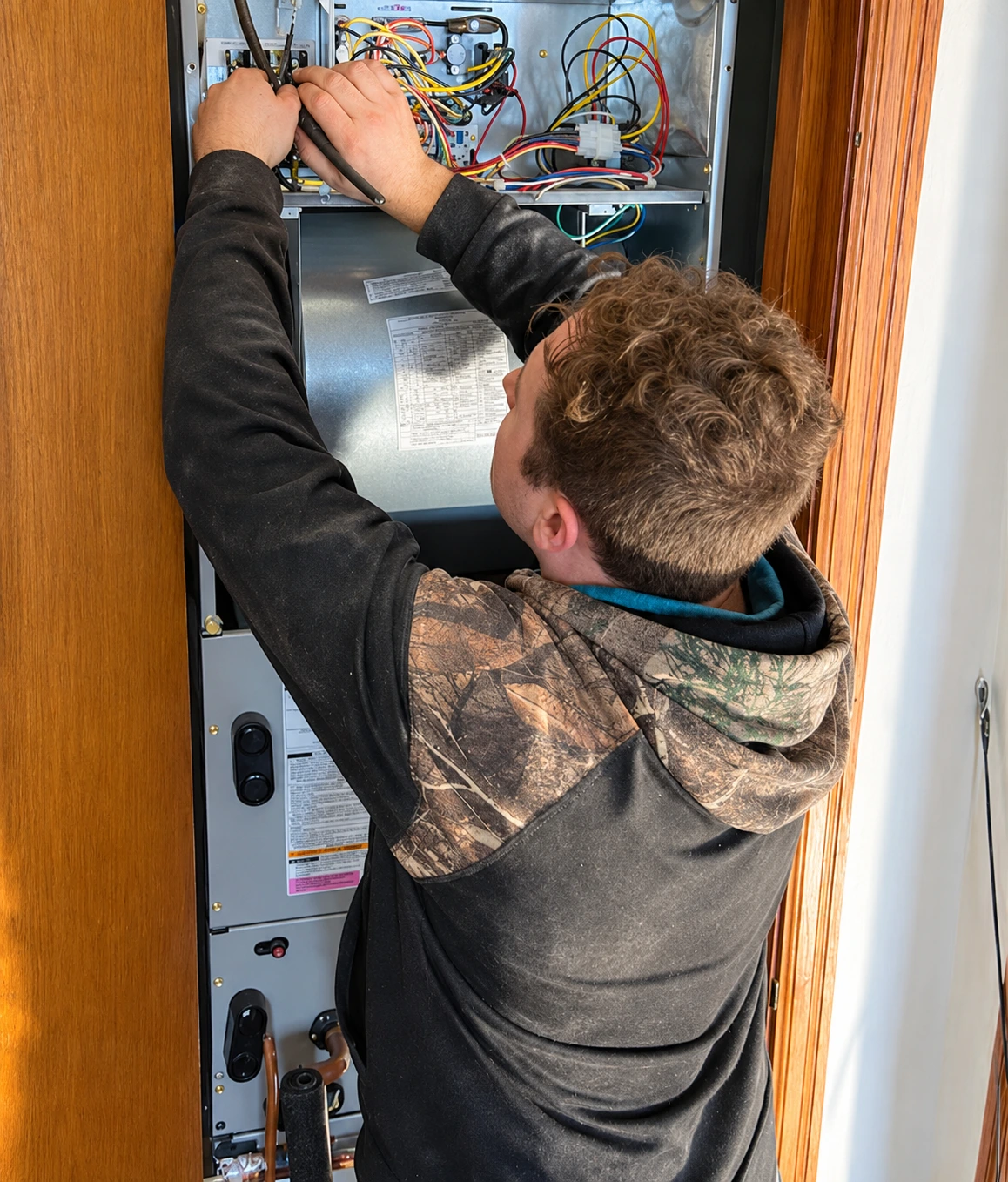
A maintenance conversation is easier when you are not already dealing with an uncomfortable building. ENERGY STAR recommends preseason checkups, with cooling service in spring and heating service in fall. Put a reminder on your calendar early enough to discuss appointment availability and any equipment concerns.
Before cooling season
Inspect the filter according to the equipment instructions, keep indoor grilles clear, and look for loose debris or vegetation around the outdoor unit. Note water, ice, new sounds or changes in comfort. Professional maintenance can include operating checks, coil and blower inspection, electrical connections and condensate drainage, depending on the equipment and agreed scope.
Before heating season
Write down any trouble from the previous winter, including repeated shutdowns or rooms that were difficult to heat. Ask about the inspection appropriate to your furnace or other heating system. Combustion checks, electrical work and equipment adjustments belong with a qualified professional. Keep the work area accessible and follow the manufacturer’s instructions for homeowner tasks.
Prepare for the visit
Make a list of installed systems, where each thermostat is located and which rooms it serves. Gather recent repair information if available. Let the company know about attic or crawlspace access, pets, tenants, locked areas and approval requirements. For a business, explain occupied hours and any limits on equipment access before the appointment.
Ask what a maintenance contract covers
Compare the actual scope rather than just the plan name. Ask how many visits are included, which systems are covered, how scheduling works, what is excluded and what happens when a repair is needed. Maintenance can reveal developing problems but cannot promise that a component will never fail. C & S offers maintenance contracts for residential and commercial customers; call with your location and equipment details to discuss current terms.
Further reading
General guidance from equipment manufacturers and public energy resources. Follow your own equipment instructions; this article does not diagnose a particular system.